Saturday, December 7, 2013

Spotted Owl


Factual Description:-

Common name:- Spotted owl
Scientific name:- Strix occidentalis

# The Spotted Owl is a species of true owl. 
# Spotted owl has a length of 43 cm, a wingspan of 114 cm and a weight of around 600 gm. 
# Medium-sized, nocturnal, spotted owl is primarily brown and is covered in white spots. 
# Spotted owl is not always spotted, owlets are born entirely white and only get their spots once they have matured. 
# Spotted owls are nocturnal, sit and wait predators. They often hunt from a perch and swoop or pounce on prey. They also grab arboreal prey from tree boles and limbs. They do occasionally hunt during the day and will hawk prey such as insects or bats. 
# Diet also includes wood rats, mice, reptiles, amphibians and insects. 
# Call sounds like ''hoo-hooooo-hooo'', ''hoot-hoot-hoot', ''co-weeep'.
# IUCN status of spotted owl is '' Near Threatened''.

Tuesday, December 3, 2013

Jacobin Cuckoo


Facts abut Jacobin Cuckoo:-

Common name:- Jacobin cuckoo
Scientific name:- Clemator jacobinus

# Jacobin Cuckoo is also known by other names, Pied Cuckoo, or Pied Crested Cuckoo. 
# Jacobin Cuckoo is a member of the cuckoo order of birds that is found in Asia. 
# It is partially migratory and in India, it has been considered a harbinger of the Monsoon rains due to the timings of its arrival. 
# This is medium sized bird, having slim back and white cuckoo with a crest is distinctive. The white wing patch on the black wing and the pattern make it unmistakable even in flight. 
# Jacobin Cuckoo is averaging about 33 cm in length. Adults have a prominent crest and a long, graduated tail. 
# Jacobin Cuckoo feed on various insects and caterpillars. 
# Makes a persistent and loud 'pipew pipew pipew' calls. 
# IUCN status of jacobin cuckoo is ''Least Concern''.

Monday, December 2, 2013

Crested Lark


Facts about Crested Lark:-

Common name:- Crested Lark
Scientific name:- Galerida cristata

# Crested Lark is a species of lark, distinguished from the other 81 species of lark by the crest of feathers that rise up in territorial or courtship displays and when singing. 
# Height is about 17 cm and a wingspan of 29 to 38 cm, weighing between 37 and 55g. 
# It is a small, brown bird and has a short tail with light brown outer feathers. 
# This is a common of bird of dry, open country and is often seen by roadsides or in cereal fields, although it is also found occupying small, sandy patches by railways, docks and airfields. 
# Diet is mainly vegetarian, primarily feeds on grains and seeds, such as oats, wheat and barley but will also eat insects, particularly beetles, with food either being scavenged from the ground or dug up.
# Residential bird. 

Saturday, November 30, 2013

Asian Pied Starling


Facts about Asian Pied Starling:-

Common name:- Asian Pied Starling
Scientific name:- Gracupica contra

# Asian Pied Starling, also known as 'pied starling' is a species of starling, usually found in small groups      mainly on the plains and low foothills. 
# This starling species is strikingly marked in black and white and has a yellowish bill with a reddish bill base. 
# The sexes are similar in plumage but young birds have dark brown in place of black. 
# They are found mainly in areas with access to open water. 
# The breeding season is from March to September. 
# The flight is slow and butterfly-like on round wings. 
# Omnivorous in diet. 

Friday, November 15, 2013

Importance of Birds

# As seed dispersers:- the seed pass through the birds intestine unaffected by the digestive juice and out with the waste matter in due course. They germinate rapidly under favorable conditions and establish themselves.

#As flower-pollinating agents:-  A large number of birds of diverse families and species are responsible for the cross-fertilization of flowers, many of them possessing special adaptations in the structure and mechanism of their tongue and bill for the purpose of extracting honey. In trying to reach the nectar, the forehead or throat of the birds comes into contact with the anthers. The ripe golden pollen dust anthers to the feathers and is transported to the mature stigma of the next flower visited, which is thus fertilizes.

# As scavengers:- vultures, kites and crows are invaluable scavengers. They speedily and effectively dispose of carcasses of cattle and other refuse dumped in the precincts of our villages-notoriously lacking in any organized system of sanitation- that would otherwise putrefy and befoul the air and become veritable culture beds of disease.

#As destroyers of insect pests:- a large proportion of the normal food of birds consists of insects, including many that are in the highest degree injurious to man and his concerns.

#As destroyers of other vermin:- owls, kestrels ,hawks and the birds of prey generally- so often accused of destructiveness to poultry and game and slaughtered out of hand- are amongst the most important of nature’s check upon rats and mice, some of the most fecund and destructive pests from which man and his works suffer. These vermin do enormous damage to crops and agricultural produce, and are, besides, the carriers directly or indirectly, of diseases often fatal to man.

Thursday, November 14, 2013

INDIAN ROBIN


Facts about Indian Robin:-

  1. These birds are about 13-15 cm long and weighs about 18 gm.
  2. Indian robin are found in open stony, grassy and scrub forest habitats. They are mainly found in dry habitats and are mostly absent from the thicker forest regions and high rainfall areas. 
  3. They are often found close to human habitations. 
  4. Indian robin feeds on insects but seen taking up the young one's of lizard,frogs. 
  5. Indian robin built their nest between rocks, in holes of building, in hollow trees. 
  6. Indian robin is terrestrial, hopping along the ground with cocked tail. 
  7. The male sings a few melodic notes during the courtship.
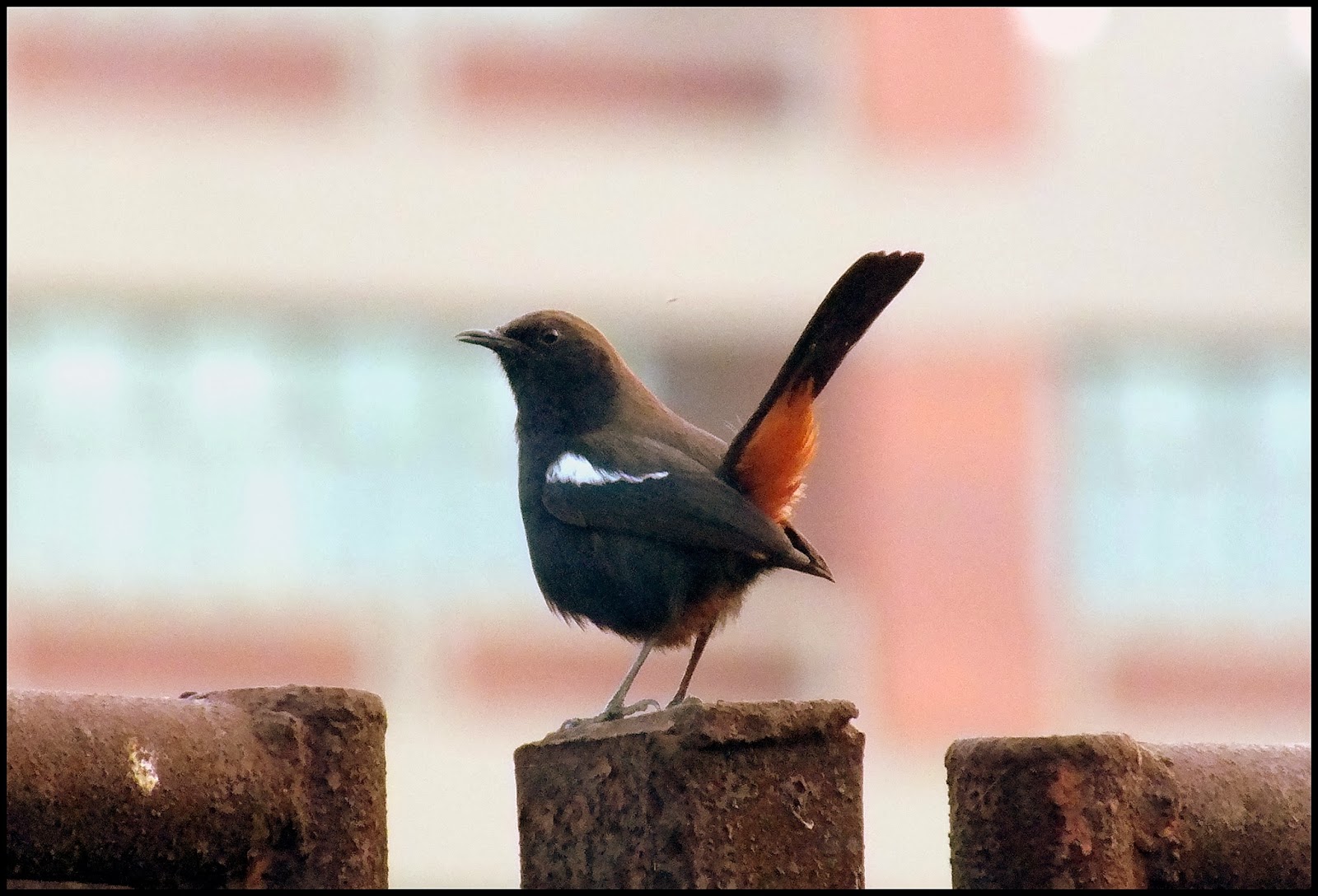
  8. Indian robin is completely glossy black apart from a white shoulder patch and a reddish lower belly.  

Friday, November 1, 2013

Extension

From now onwards, we will be updating about the avifaunal diversity of whole Delhi region, India. Earlier, it was only limited to a specific region, which is- Dwarka. But with our increased field work and study, we are able to cover the whole Delhi. So for our blog viewers and readers, it is good news for therm as they will be getting more updates from ourside through this blog. That is the reason we have changed the name of the blog from ''Flyingmachinesofdwarka.blogspot.in'' to ''Flyingmachinesofdelhi-india.blogspot.in''.

Cheers to Camera.